
How AI Decides Which Local Businesses to Recommend
A homeowner three miles from your office just typed "who's the best real estate agent near me" into ChatGPT. It named three agents. You weren't one of them.
That is the new front door for local business. Your customers are not scrolling a page of ten blue links anymore. They ask an assistant, they get a short list, and they call the names on it. If the AI doesn't say your name, you never get the chance to earn the business.
Here's the good news for a busy owner: the signals AI uses to pick those names are mostly things you already control. Let's walk through what actually decides who gets recommended, and why so many good businesses stay invisible.
Key Takeaways
- 45% of consumers used AI to find a local business in 2026, up from 6% in 2025, making AI the third most-used discovery tool behind Google and Facebook (BrightLocal, Mar 2026).
- When Google shows an AI summary, people click a normal search result in only 8% of searches, versus 15% without one (Pew Research, Jul 2025). If the AI doesn't name you, almost nobody clicks through to find you.
- AI leans on the same reputation signals as local search (complete profile, reviews, relevance, distance, prominence) plus a new one: how often credible sources mention and cite you.
- Ranking number one is no longer enough. Only 38% of AI Overview citations come from pages in Google's top 10 (Ahrefs, Mar 2026).
Your customers are already asking AI for recommendations
This shifted faster than almost any owner expected. In one year, the share of consumers using AI tools to find a local business jumped from 6% to 45% (BrightLocal, Mar 2026). That same survey now ranks AI as the third most-used way people discover local businesses, ahead of Yelp and TripAdvisor.
It is not a young-person novelty either. AI use for local recommendations peaks at 64% among people aged 30 to 44, prime buyers for a home, a lawyer, or a new roof. ChatGPT leads the tools people reach for at 31%, with Google's AI Mode at 23% (BrightLocal, Mar 2026).
The audience keeps growing under those numbers. Roughly 44% of US adults have now used ChatGPT, up from 34% in early 2025 and about 18% in 2023 (Pew Research, 2025 and 2026 updates). When a habit spreads that quickly, "we'll deal with it later" quietly turns into a year of missed calls.
What "showing up in AI" really means
There are two places an AI can recommend you, and they work a little differently.
The first is Google's AI Overview, the summary that now sits at the top of many search results. It is common and it moves around. AI Overviews appeared in about 6.5% of tracked queries in January 2025, spiked to nearly 25% by July, then settled under 16% by November (Semrush data, via Search Engine Land, 2025). Pew measured a similar footprint, with an AI summary on roughly 18% of searches in early 2025 (Pew Research, Jul 2025).
The second is a direct assistant answer, when someone asks ChatGPT, Gemini, or Google's AI Mode straight out: "who should I call for water damage in Auburn?" There is no page of results at all. The assistant reads across the web, then hands back a short list of names.
In both cases the model is doing the same core job. It pulls a set of candidate sources, decides which ones to trust enough to name, and writes an answer. Your entire goal is to be in that trusted set. If you want to know where you stand today, you can get a plain-English read on your local AI visibility and see how the assistants currently describe your business.
No recommendation, no customer: the zero-click problem
This is the part that should get every owner's attention. When an AI answer appears, the customer usually stops right there.
Pew tracked real browsing behavior across nearly 69,000 searches. When an AI summary was present, people clicked a traditional search result in just 8% of searches, compared with 15% when there was no summary, close to half the clicks. Only 1% clicked a link inside the AI summary itself, and users ended their browsing session entirely on 26% of pages with a summary versus 16% without (Pew Research, Jul 2025).
Read that as an owner, not a marketer. The AI answer is now the storefront window. If it names three competitors and not you, the customer has what they need and moves on. They will not scroll down to find you, because they no longer feel a reason to look. Getting named in the answer is the whole game.
How AI actually decides who to recommend
Here is the reassuring part. AI does not use some secret score you can't touch. For local recommendations, it leans heavily on signals Google has published for years, then adds a layer about your reputation across the wider web.
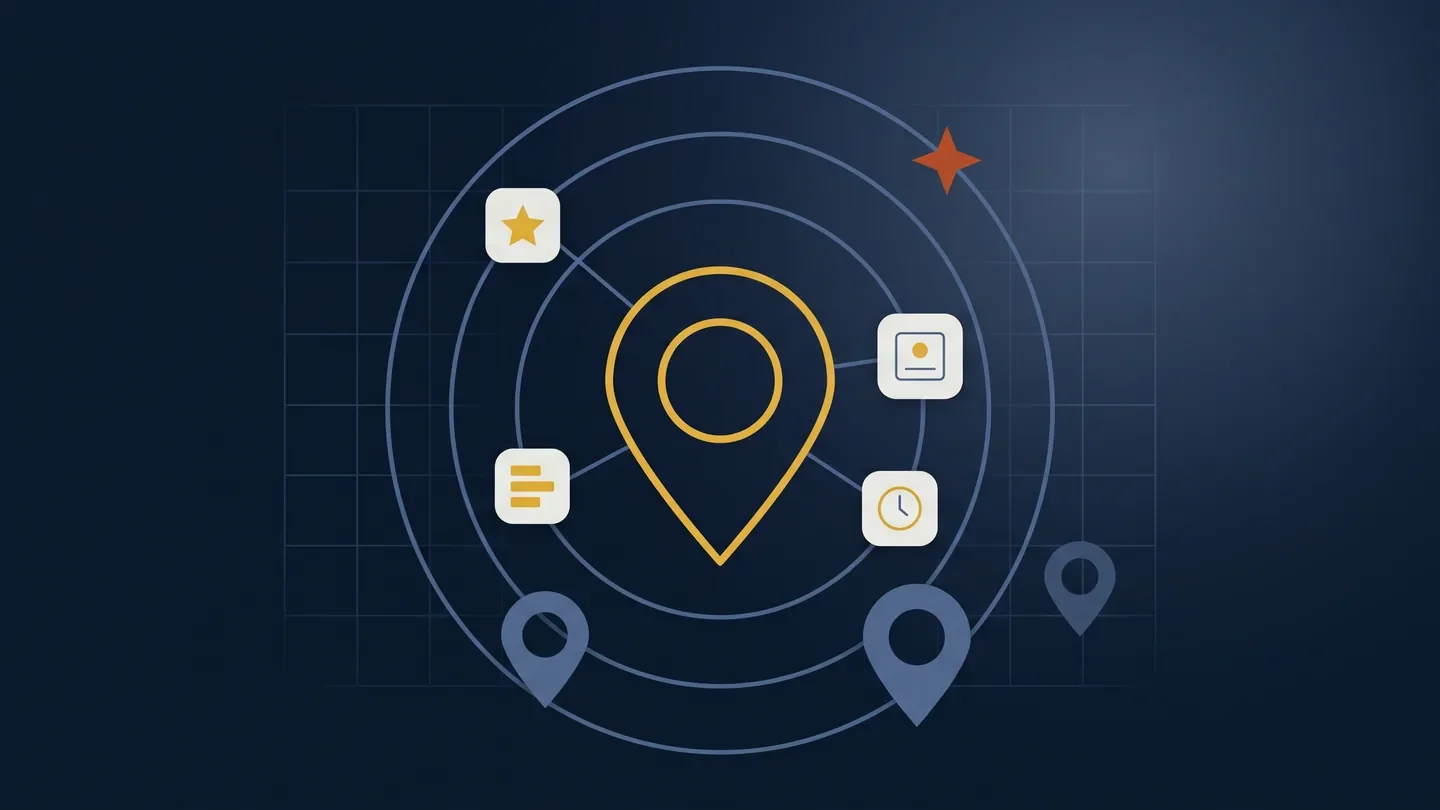
Relevance, distance, reviews, and complete information feed the same decision. Most of it you already control.
Relevance, distance, and prominence
Google states plainly that local results are ranked on three things: relevance (how well you match what was asked), distance (how close you are to the searcher), and prominence (how well known and well regarded you are). Google also says outright that "there's no way to request or pay for a better local ranking" (Google Business Profile Help). AI recommendations ride on top of this same foundation, because the assistant is reading the same public signals about who is relevant, close, and reputable.
Reviews carry real weight
Reviews do double duty. Google says directly that "more reviews and positive ratings can help your local ranking," which feeds the prominence signal (Google Business Profile Help). Customers feel the same way: 71% read reviews regularly when weighing a local business, and 41% check three or more review sites before deciding (BrightLocal, 2025).
Reviews matter even after the AI speaks. Among people who use AI for recommendations, 97% double-check the suggestion against real reviews, and 88% fact-check the source before acting (BrightLocal, Mar 2026). A thin or stale review profile can lose you the customer twice: once when the AI skips you, and again when a curious prospect looks you up and finds little.
Complete, consistent information
Google is blunt about this one too: "businesses with complete and accurate info are more likely to show up" (Google Business Profile Help). That means a fully filled-out Google Business Profile, correct hours, the right categories, and the same name, address, and phone number everywhere they appear online. When your details conflict across the web, you make the AI's trust decision harder, and "harder to trust" often becomes "left out."
Mentions and citations across the web
This is the newer signal, and it is where AI recommendations diverge from old-school SEO. Generative engines favor sources that are credible and quotable. The foundational research on this, the peer-reviewed "Generative Engine Optimization" paper accepted to ACM KDD 2024, found that content backed by citations, quotations, and clear statistics can lift a source's visibility in AI answers by up to 40%, and that what works varies by industry (Aggarwal et al., arXiv, KDD 2024).
In practice, that rewards businesses the wider web talks about: a mention in a local news story, an accurate listing in a respected directory, a helpful answer in a community thread, an active profile on the platforms buyers trust. The more credible sources that reference you consistently, the more confident an AI is to put your name in its short list.
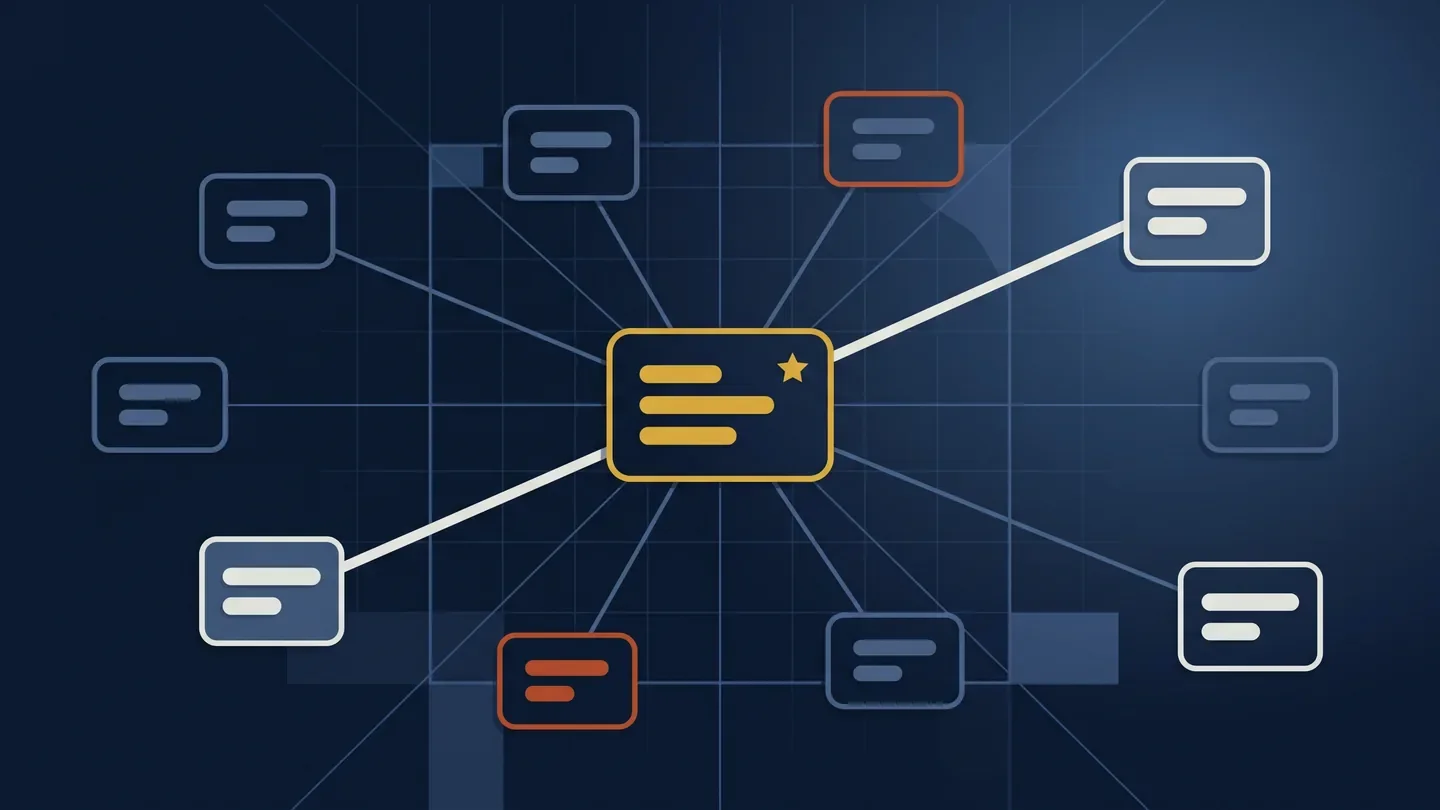
The more credible sources that describe your business consistently, the more confident an AI is to name it.
| Signal | Classic local search | AI recommendation |
|---|---|---|
| Complete, accurate profile | Important | Important |
| Reviews (volume, rating, recency) | Important | Important |
| Relevance and distance | Important | Important |
| Consistent name, address, phone | Important | Important |
| Mentioned and cited by credible sources | Helpful | Heavily weighted |
| Keyword-stuffed pages | Weak, risky | Ignored |
Why being number one on Google isn't enough anymore
Plenty of owners assume that if they rank at the top of Google, the AI will echo it. That assumption is now wrong often enough to cost you.
Ahrefs studied 863,000 search results and roughly 4 million AI Overview links. Only about 38% of AI Overview citations came from pages ranking in Google's top 10, down sharply from about 76% in a July 2025 study. The rest came from further down the rankings or from pages not ranking on page one at all (Ahrefs, Mar 2026).
Two things drive that gap. First, Google now uses "query fan-out," breaking one question into several sub-questions and pulling sources that answer the whole cluster, not just the original phrase (Ahrefs, Mar 2026). Second, AI pulls from a wider pool of sources than the classic result list. YouTube is now the single most-cited domain in AI Overviews (Ahrefs, Mar 2026), which tells you the answer engine reaches well beyond ten ranked web pages. The takeaway is not "rankings stopped mattering." It is that rankings alone no longer guarantee the recommendation, so reputation and credible mentions have to do more of the work.
What to do this quarter
You do not need a technology overhaul. You need to make yourself the obvious, well-documented choice. Start here:
Complete your Google Business Profile fully. Correct categories, hours, service area, photos, and services. This is the single highest-return hour you can spend.
Make reviews a routine, not a campaign. Ask every satisfied customer, respond to each review, and keep them recent. Volume, rating, and recency all feed the signal.
Fix your name, address, and phone everywhere. One version, matching across your site, your profile, and every directory. Clean up the conflicts.
Earn credible mentions. A local news feature, an accurate industry directory listing, a genuinely helpful answer where your customers already gather. Consistent references from trusted sources build the reputation AI reads.
Write clear, factual pages that answer real customer questions. State who you serve, where, and what makes you the right call. Skip the keyword stuffing; it does nothing for AI answers and can hurt you.

The signals that win AI recommendations are the same ones that make a phone ring.
Then check your work the way a customer would. Ask ChatGPT and Google's AI Mode for a recommendation in your category and town, and see whether your name comes up and whether the details are right. If you'd rather have that mapped for you, see how AI answers currently describe your business with an EagleWorks AI Payoff Snapshot. We tell you what's actually costing you the recommendation, not a pile of jargon.
Frequently asked questions
Why doesn't my business show up when people ask AI for a recommendation?
Usually one of three reasons: your Google Business Profile is incomplete or inconsistent, your reviews are thin or stale, or few credible sources mention you online. AI names businesses it can confidently identify as relevant, close, and well regarded. Fix the profile and reviews first, then work on earning trustworthy mentions.
Is optimizing for AI different from regular local SEO?
It shares the same foundation and adds one layer. Complete profiles, strong reviews, relevance, distance, and consistent information still matter for both. AI puts extra weight on how often credible sources mention and cite you, and it pulls from a wider pool than the top ten search results (Ahrefs, Mar 2026).
Can I pay Google or an AI to recommend my business?
No. Google states directly that "there's no way to request or pay for a better local ranking" (Google Business Profile Help). The businesses that get named earn it through complete information, real reviews, and genuine reputation.
How fast do results move once I improve these signals?
Profile and review improvements can influence what customers see within weeks, though reputation across the web builds over months. The point is to start, because the customers asking AI today are choosing from whoever the AI can name today.
The bottom line
The way people find local businesses changed, and it changed quickly. Nearly half of consumers now ask AI for a recommendation, and when the AI answers, most of them stop looking. Getting named in that answer is the new version of showing up.
The encouraging part is that the levers are familiar and firmly in your hands: a complete profile, real and recent reviews, consistent information, and credible mentions across the web. Do those well and you become the answer the AI feels safe giving. Ignore them, and you stay the business nobody hears about, three miles away and invisible.
About EagleWorks AI. EagleWorks AI is an AI consulting firm in Opelika, Alabama, founded by Mark McCary, that helps small businesses across the Auburn and Opelika area put AI to work on real outcomes. Our work spans local AI visibility, custom workflows, and hands-on AI training for owners and their teams. Practical AI. No hype. Just ROI. Learn more at eagleworksai.com.