
A wave of new AI bots. The question isn’t which one. It’s what you’ve given them.
If you own a business in Auburn-Opelika, or you sit in enough Chamber rooms to feel the ping in your inbox, the last few weeks of AI headlines can feel like homework you did not assign yourself.
Another bot that can "just handle it." Then another. Then another.
You're not behind. Setup got easier. The question underneath the logos did not.
TL;DR: OpenAI's ChatGPT Dots, xAI's Grok Bot, Meta's Muse, Google's Gemini Spark, and Microsoft Autopilot (previously called Scout) are part of the same stretch of launches: always-on agents that work from your direction plus access to your apps. The category isn't brand new. Packaging just got friendlier. For owners, the useful question isn't which logo wins. It's whether your foundation is ready so these tools are safe and effective: access, guardrails, shared context, and skills with approval points.
Access: which systems the bot can touch (email, calendar, CRM, POS, files), and how wide that door is.
Guardrails: your rules, approvals, and when it must stop and ask a human.
Context (second brain): org and role background, brand voice, and the reusable skills and references that sit with them, so ChatGPT, Grok, Muse, Gemini, or Copilot share the same ground truth. Karpathy-style infrastructure, not twelve conflicting chat histories.
Skills + references: reusable automations you can define once (an open Agent Skills format is making that more portable across products) plus docs and objectives. Explicit outcomes often beat vague process manuals. You still need thought-through approval points.
What to do this week: inventory one high-risk system you would not connect yet, and write three "must ask me first" rules on a sticky note. That is foundation work. Not FOMO work.
What actually shipped in this wave
Agents that keep working after you walk away are not brand new. Developer agent APIs and earlier tools already existed. What changed across this stretch of launches is packaging: messaging UIs, included cloud computers, and "connect the apps you already use" setup that looks more like texting a coworker than a six-week IT project.
Here are the names you'll hear, and what each one is actually selling:
Meta Muse (Sep 8): a personal agent with its own cloud computer, via the Muse app or WhatsApp, that asks before sensitive sends or purchases. Consumer and personal-first. Later small-business connectors (late September) do not make it a mid-market ops peer overnight. It matters here as pattern proof: the mainstream version of direction plus access.
xAI Grok Bot (beta Aug 11; enterprise early September): always-on teammates with cloud computers that sign into your tools and return when they need a decision, with enterprise access, network, and audit controls.
OpenAI ChatGPT Dots (Sep 29, DevDay): always-on agents with their own cloud computer and browser, initially for Pro and Business users in eligible markets, with approvals before sensitive actions.
Google Gemini Spark: a 24/7 personal agent across Gmail, Calendar, Drive, Docs, Sheets, and more, under your direction (Tasks, Skills, Schedules). Checks before major actions. Workspace shops: this is the real name. Not a rumor called "Google Spark."
Microsoft Autopilot (previously called Scout; highlighted Sep 25): give it a role and a goal; it watches channels, follows up, runs recurring work, and resumes projects later, with tenant identity, permissions, and governance. For Teams and Outlook shops, this is Microsoft's direction-plus-access product in the current wave.
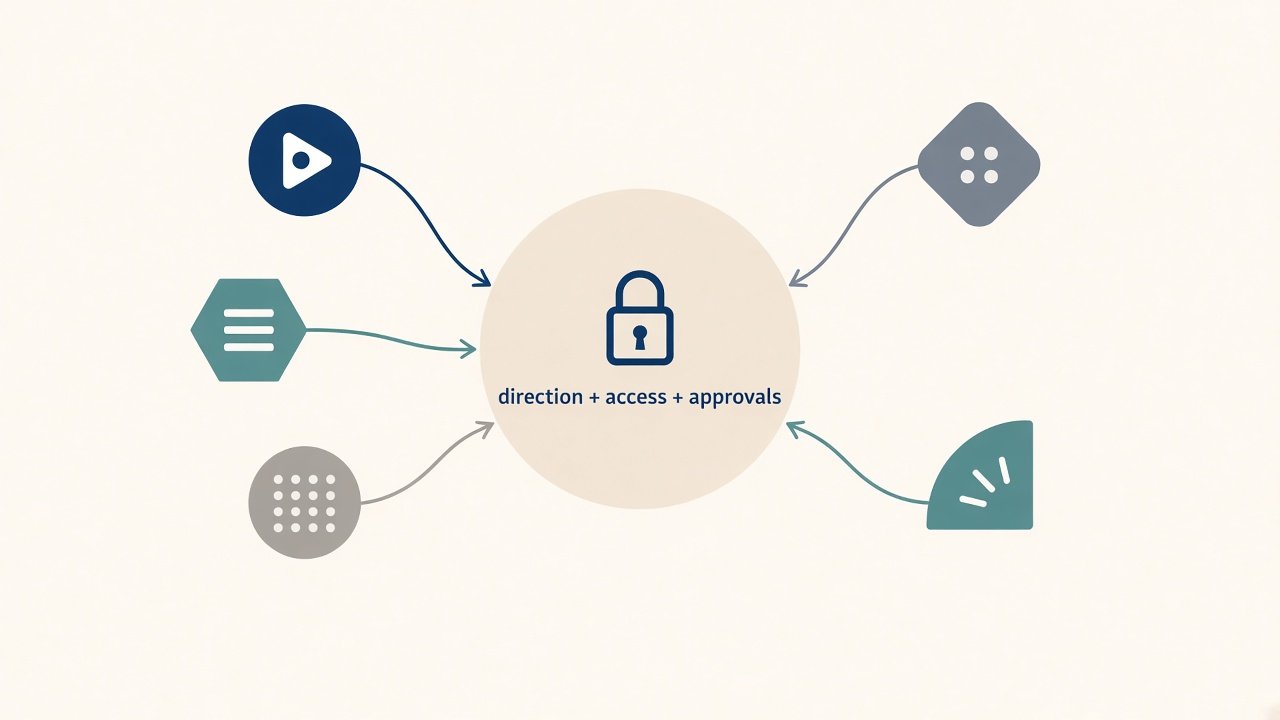
Different logos. Same operating pattern: direction + access + approvals.
Different logos. Same operating pattern: direction + access + approvals.
What the hype is saying
The feed version is simple: pick a bot, connect everything, watch work disappear.
Fair as a demo story. Incomplete as an operating plan.
An agent that can touch your inbox, booking system, or client files is closer to giving a sharp temp the keys and a task list. Wonderful when the keys and the "call me before you hit send" rules are clear. Expensive when they are not.
Ease of setup is the feature. Restraint is still the strategy.
The question that actually matters
Regardless of the shiny object (and this wave is a real one), the question for a business owner is not which bot. It is whether your foundation is ready so these tools are safe and effective.
Safe means the blast radius is intentional. Effective means the bot works from your real policies, offers, tone, and "never do this" list. Without that, you get speed without judgment: brand drift, bad sends, and a week of cleanup.
Eloise Stewart put it cleanly in a post she published herself: the companies that win won't be the ones using AI the most. They'll be the ones using it with the most judgment. (Her piece is worth a read if your team is bouncing between tools.)
First, what we mean by "foundation"
Foundation is not a six-figure rebuild. For most owners in the $2-20M, 10-100 person range, it is four layers you can name in a staff meeting.
Access
Decide what the agent can touch. Not "everything we pay for." Specific systems: email send vs read-only, calendar, CRM notes, inventory, payroll (almost never on day one), shared drives.
Whether it is Gemini Spark on Workspace, Autopilot in your Microsoft tenant, a Dot with plugins, or a Grok Bot signed into SaaS, the bot is only as wide as the doors you open.
If you would not hand a new hire the password without a conversation, do not hand the bot the same password without a conversation.
Guardrails
Write the stop rules. Approvals before external email, money moves, or anything client-facing on your letterhead. A human still owns the exceptions.
Vendors will advertise safety features. Good. You still need your rules on top. Their permissions do not know your GM is the only person who discounts banquet packages.
Context (the second brain)
This is the quiet difference between a parlor trick and a teammate. Org background, role background, brand voice, pricing boundaries, "how we do things here," and the reusable skills and reference docs that encode how work should run. When ChatGPT, Grok, Muse, Gemini, and Copilot each invent a slightly different version of your company, you feel it in the writing and the decisions.
Karpathy-style infrastructure language helps here: a durable place the models can draw from, not a blank chat every Monday. That second brain is not only a pile of PDFs. It is shared ground truth plus the skills and references that turn ground truth into repeatable work. Call it a knowledge layer or a workstation. The name matters less than one shared stack the next tool can load.
Skills + references
Reusable automations (skills) are the how-to layer of that same second brain. Major AI products have been converging on a shared open format called Agent Skills: a portable folder with a SKILL.md file (and optional scripts and references) so you can define a workflow once and reuse it across compatible agents, instead of rewriting the same playbook for every logo. Gemini Spark even uses "Skills" as product language for repeated work. Invest in the work definition, not only the vendor.
Pair skills with references: SOPs that state outcomes ("confirm reservation, note party size, never promise outdoor seating without checking weather holds") beat manuals that narrate every click.
Explicit outcomes help the bot. Approval points keep you in the loop where judgment lives.
What this means if you own a local business
Professional services. Drafting follow-ups only helps if the bot knows engagement-letter rules and when a human must review. Start with internal drafts, not unsupervised client sends.
Restaurants. Start with schedules, promo drafts, and review replies held for approval. Auto-sends to guests and unchecked vendor ordering can wait.
Field service. Scheduling skills are great until "change anything" access has no approval. Keep dispatch and customer-facing changes on a short leash at first.
Retail. Promo helpers need discount and public-post guardrails more than a friendlier avatar. Connect inventory read-only before you connect the ability to change price tags.
Microsoft shops. Autopilot (Scout) will feel tempting because it sits where work already happens. That makes access and audit more urgent, not less.
Google shops. Gemini Spark will feel native. Same rule: connect Gmail send only when "ask before send" is written down.
Shiny-object FOMO is normal. The antidote is a short foundation checklist, not a bake-off on day one.
What to actually do (this week)
Pick one workflow you would love an agent to own (example: draft the weekly staff update, not send it).
List every system that workflow would need. Circle anything customer-facing or money-moving.
Write three guardrails on paper. "Ask before send." "No discounts." "No deleting records."
Drop your real context (brand voice, one-pager on offers, who approves what) and one reusable skill or outcome-first SOP into one place your team already uses, so the next tool you try is not starting from zero.
Wait on "connect everything." Ease of setup is the feature. Restraint is the strategy.
If you want a sounding board on whether your foundation is ready before you plug an always-on agent into the front door, we are happy to talk through an assessment-style conversation. No product shootout required.
Do I need to pick Dots, Grok Bot, Muse, Gemini Spark, or Autopilot right now?
No. Learn the pattern (direction + access + approvals). Pick a vendor when a real workflow and a real risk budget are clear.
Is Meta Muse a business tool?
Muse is built first as a personal agent. Late-September small-business connectors expand what it can touch, but that does not make it a mid-market ops suite tomorrow. For owners, the relevance is the pattern and the FOMO, not a claim it replaces your stack.
What about Gemini Spark vs Microsoft Autopilot?
Same pattern, different ecosystems. Spark leans Google Workspace. Autopilot (formerly Scout) leans Microsoft 365. Choose where your team already works, after access and guardrails are clear.
Isn't this just ChatGPT with extra steps?
Chatbots answer. Agents act across systems. The extra steps are access and authority. That is why foundation work matters.
What is "Karpathy infrastructure" in plain English?
A durable second brain: the docs, rules, skills, and references AI tools should share, instead of each chat reinventing your company.
Where should a 30-person company start?
One low-blast-radius workflow, read-mostly access, three written approval rules, and shared context (including one skill worth reusing). Expand after a clean week.
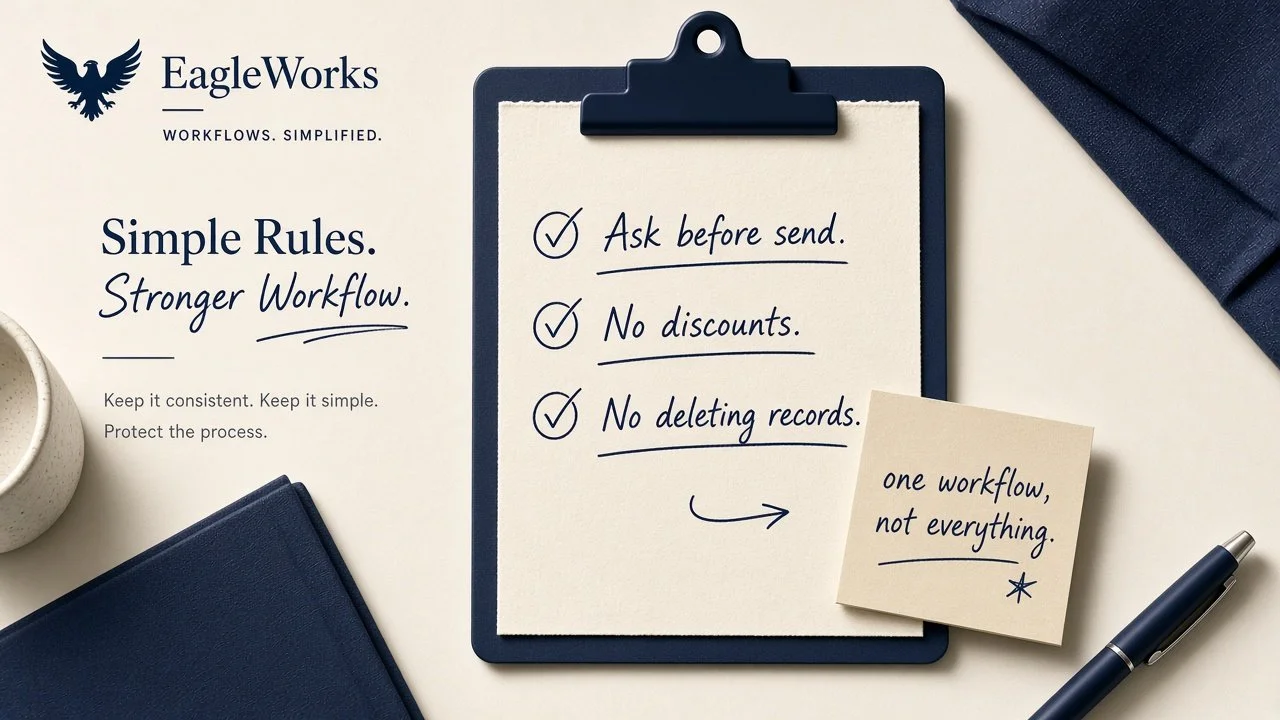
Foundation work. Not FOMO work.
Practical AI. No hype. Just ROI.
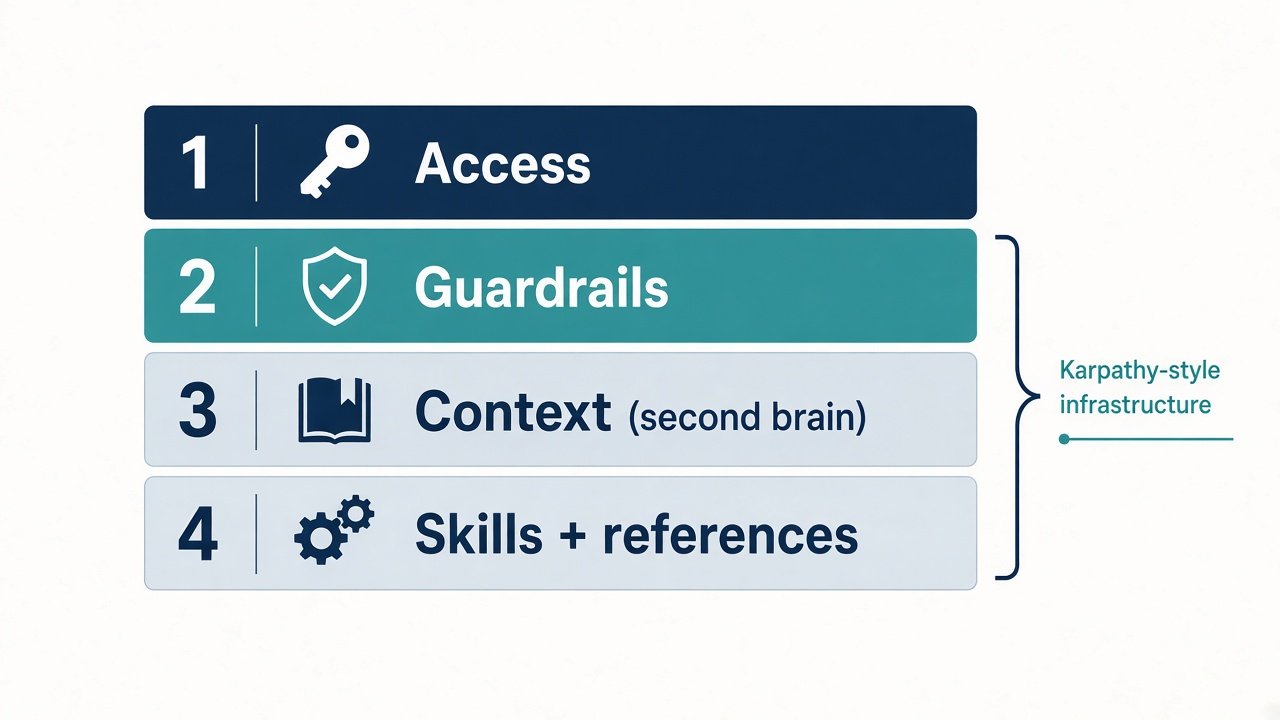
Foundation is four layers you can name in a staff meeting.
EagleWorks AI - Auburn, Alabama